
The next phase of AI adoption will not be determined solely by who builds the most capable frontier model. It will be determined by who can make high-quality intelligence economically deployable at scale.
That is where GPT-6.1 Sol becomes interesting. Announced alongside Dots and Spaces at DevDay, GPT-6.1 Sol is positioned as an efficiency-oriented model architecture designed to deliver a substantial portion of frontier-model capability at significantly lower inference economics than OpenAI's top-tier Astra model.
OpenAI reports that, across selected evaluations, Sol approaches Astra-level performance while operating at roughly one-fifth of Astra's standard input and output token cost. For developers and organizations operating under metered compute budgets, API quotas, or capped ChatGPT usage, model selection is no longer simply a question of capability. It becomes an inference-cost optimization problem.
Intelligence has an inference curve
The AI industry has spent the last few years optimizing for one primary metric: how intelligent can the model become? The next optimization frontier is broader: how much useful intelligence can we deliver per unit of compute?
That changes the economics of AI workloads. A frontier model such as Astra may be the optimal choice when a task requires maximum reasoning depth, complex autonomous execution, or highly context-sensitive decision-making. But a large percentage of real-world workloads do not require the absolute frontier.
- Document analysis
- Code generation and refactoring
- Technical research
- Data transformation
- Summarization
- Architecture discussions
- Routine debugging
- Business analysis
For these workloads, the objective function is different: capability multiplied by reliability, divided by inference cost. That is where Sol can become a compelling default model.
Sol as the production workhorse
The interesting architectural implication is that Sol does not need to outperform Astra universally. It only needs to reach a sufficiently high capability threshold across common workloads while dramatically improving cost efficiency.
Think of Astra as a frontier reasoning engine and Sol as a high-throughput intelligence layer. We do not execute every workload on the most expensive compute tier. AI inference is moving toward the same model-selection paradigm.
- Sol as the default inference layer
- Astra as the high-complexity reasoning layer
- Specialized agents as the autonomous execution layer
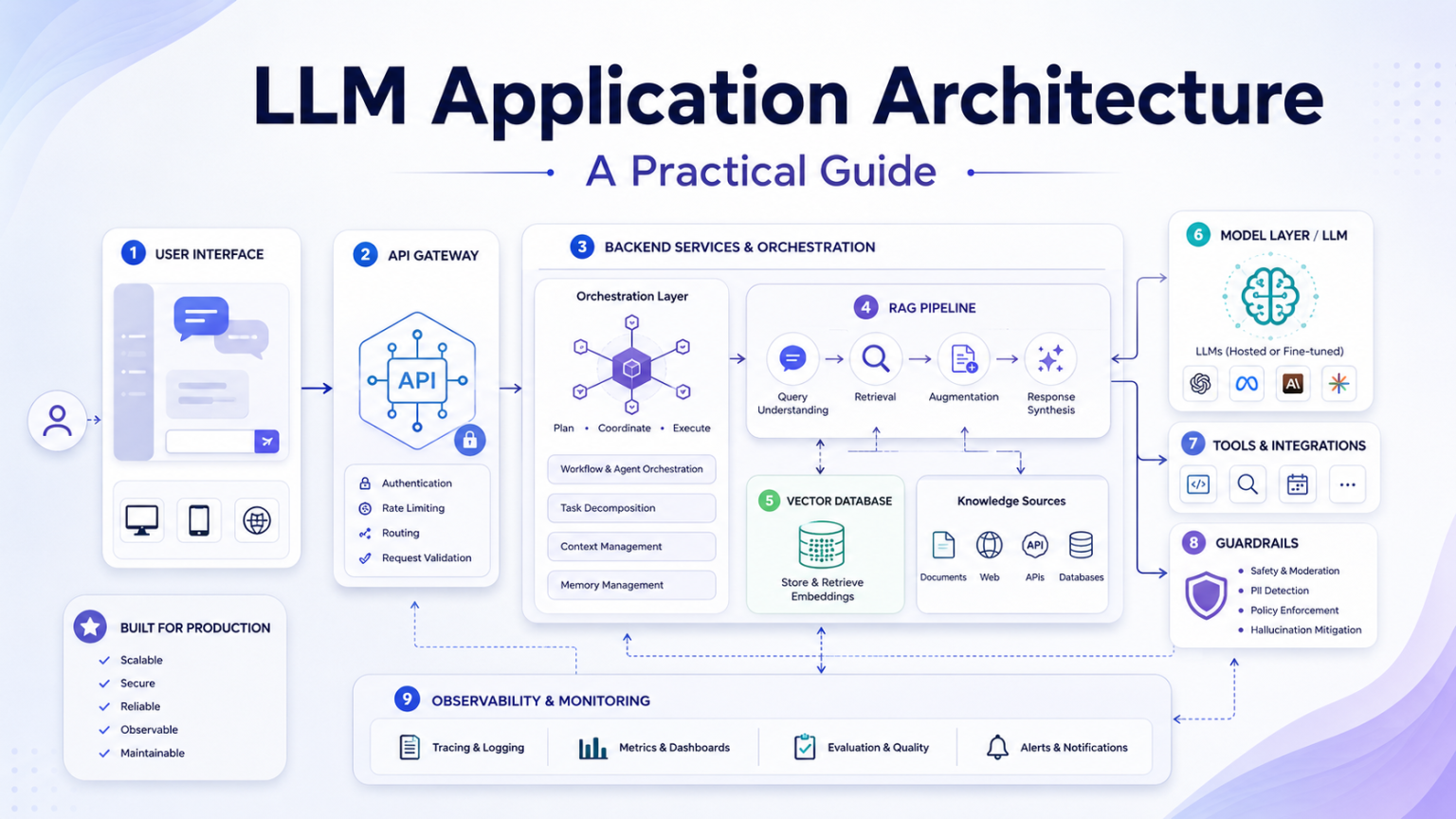
This creates a form of intelligence routing where the model is selected according to the complexity, context depth, and risk profile of the task.
The token economics matter
The cost advantage becomes particularly significant at scale. If two models produce broadly comparable results for a given workload, but one requires approximately five times the token expenditure of the other, the difference becomes infrastructure economics at millions or billions of tokens.
- Larger context windows can be used more aggressively.
- Code generation can include more iterations.
- Agentic interactions can happen more frequently.
- Document ingestion can become broader.
- Teams can experiment more without every attempt feeling expensive.
- AI-assisted workflows can become more continuous.
In other words, cheaper intelligence changes user behavior. And behavioral changes are ultimately what drive platform-level AI adoption.
Why this matters for ChatGPT users
For users operating under metered or capped plans, the economics are tangible. Early usage patterns suggest that users who move routine workloads from Astra to Sol can substantially reduce the amount of their weekly usage consumed by those workflows.
The strategic implication is straightforward: do not spend frontier-model compute on non-frontier problems. If you are reviewing a technical document, refactoring a conventional API, generating SQL, explaining a codebase, or conducting first-pass research, an efficiency-oriented model may provide the optimal capability-to-cost ratio.
Astra still has a strategic role
The existence of Sol does not make Astra obsolete. It creates a model hierarchy. Some workloads inherently benefit from frontier-level reasoning: long-horizon planning, complex multi-step reasoning, autonomous execution, ambiguous research problems, high-stakes technical decisions, and large-scale context synthesis.
OpenAI continuing to use Astra for its newer Dots agents is an important signal. It suggests that agentic workloads have a different compute profile from conventional conversational workloads because an agent has to interpret goals, build plans, inspect external state, execute tools, evaluate intermediate results, recover from failures, and decide when the task is truly complete.
Intelligence as infrastructure
The most interesting aspect of Sol is not simply that it is cheaper. It is what lower-cost intelligence enables. When inference becomes sufficiently inexpensive, users stop treating AI as an occasional tool and start treating it as an always-available computational layer.
Instead of asking whether a workflow should use AI, teams begin asking why the workflow would not have an intelligence layer. Developers can put models deeper inside applications. Companies can introduce AI into internal workflows. Agents can perform more iterations. Users can provide larger amounts of context.
This creates a positive feedback loop: lower inference cost leads to more usage, more context, better personalization, more useful AI, and more usage. That loop could ultimately be more strategically important than any single benchmark score.
The emerging model strategy
The practical takeaway for heavy ChatGPT users is simple. Do not think of Sol and Astra as competing products. Think of them as different tiers in an inference stack.
- Use Sol for high-volume workloads such as coding, research, documents, analysis, SQL, technical writing, and routine reasoning.
- Escalate to Astra for deep reasoning, complex planning, autonomous execution, high-context synthesis, and frontier-level problem solving.
This is the same principle used in distributed systems and cloud infrastructure: match compute intensity to workload complexity. The smartest architecture is not necessarily the one that uses the most powerful compute everywhere. It is the one that allocates the right amount of compute to the right workload.
The strategic significance
GPT-6.1 Sol represents a broader shift in the AI industry. The first generation of frontier AI competed primarily on capability. The next generation will increasingly compete on capability per dollar, latency, throughput, context efficiency, reliability, tool-use performance, agentic execution, and infrastructure scalability.
Once intelligence becomes cheaper, the bottleneck moves. The question stops being how powerful the model is and becomes how much intelligence can be economically embedded into everything. That is the real significance of Sol.